Defining the Problem
We’ve coined an acronym which evokes the dire condition of our health care system.
Health care in Utah is ICU:
Insecure, Complex, & Unaffordable
Insecure
Nearly 10% of Americans lack healthcare coverage, and over 20% are underinsured. Unpredictable policy changes by federal and state governments and private insurers can lead to a sudden loss of coverage. Job losses associated with cyclical economic fluctuations also threaten families’ financial stability when they are most vulnerable.
Complex
Private insurers set inconsistent pricing and create unnecessary administrative hurdles that prioritize profits over patient care. Medical providers and hospitals must conform to the unique practice requirements and billing policies of dozens of different insurers. Arbitrary changes to in-network provider panels compromise continuity of care.
Unaffordable
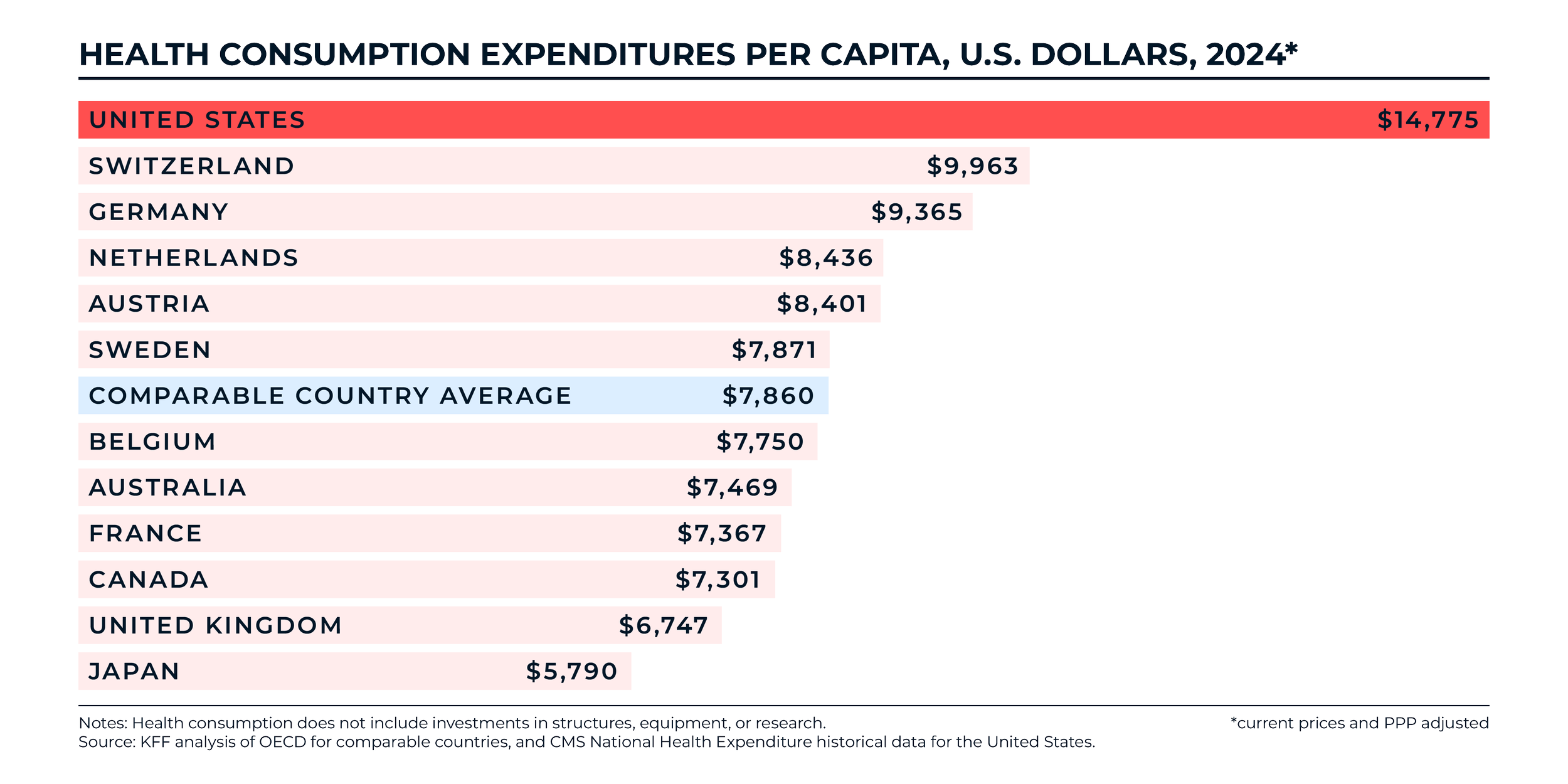
Medical costs in the United States are more than double the average of those in other advanced nations. Nearly one-third of Americans carry medical debt, and it remains the leading cause of personal bankruptcy. That’s because health care in the United States is a business, and businesses exist to provide profits to their executives and shareholders. Elsewhere in the world, health care is a service that is accountable to the people who pay for it.
While other developed nations have employer-based health insurance, the U.S. is the only major economy where employer-sponsored coverage is the dominant and nearly universal source for working-age adults. No other country allows unregulated for-profit insurance companies to be the primary source of health care coverage.
The free-market forces that spur other sectors of the American economy to thrive are not appropriate when applied to health care. Free markets require those on each side of a transaction to have equal footing. That is not the case with health care, where the consumers are always at a disadvantage. There is no opportunity to negotiate prices in the setting of an urgent medical need.
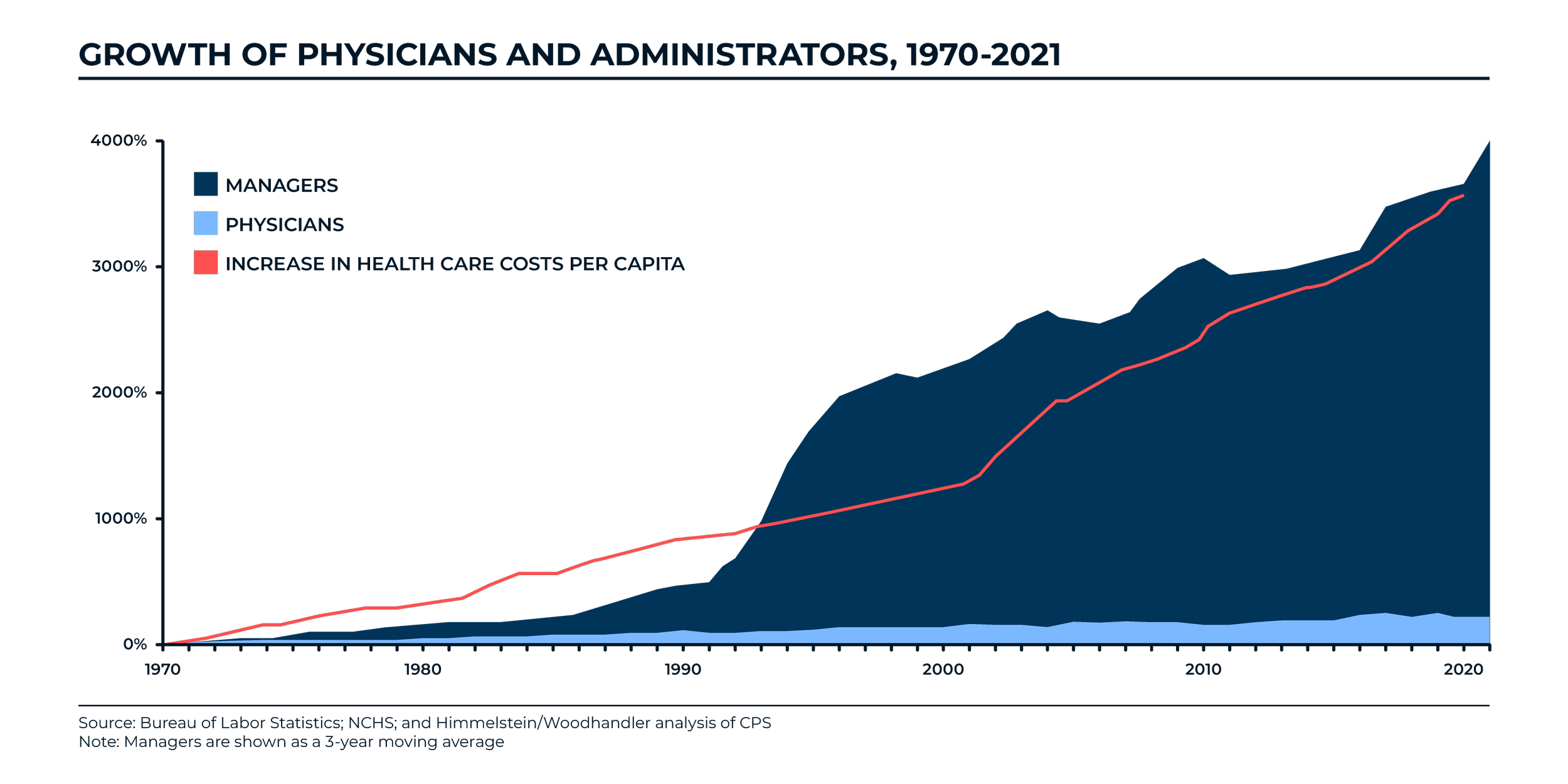
These graphs illustrate the results of allowing the for-profit insurance industry to control the terms of medical care in the United States.


Costs can be cut significantly by aggressively reducing the dark blue area in the graph below. That area represents the people who profit from the health care industry, but who do not provide medical care to patients.